

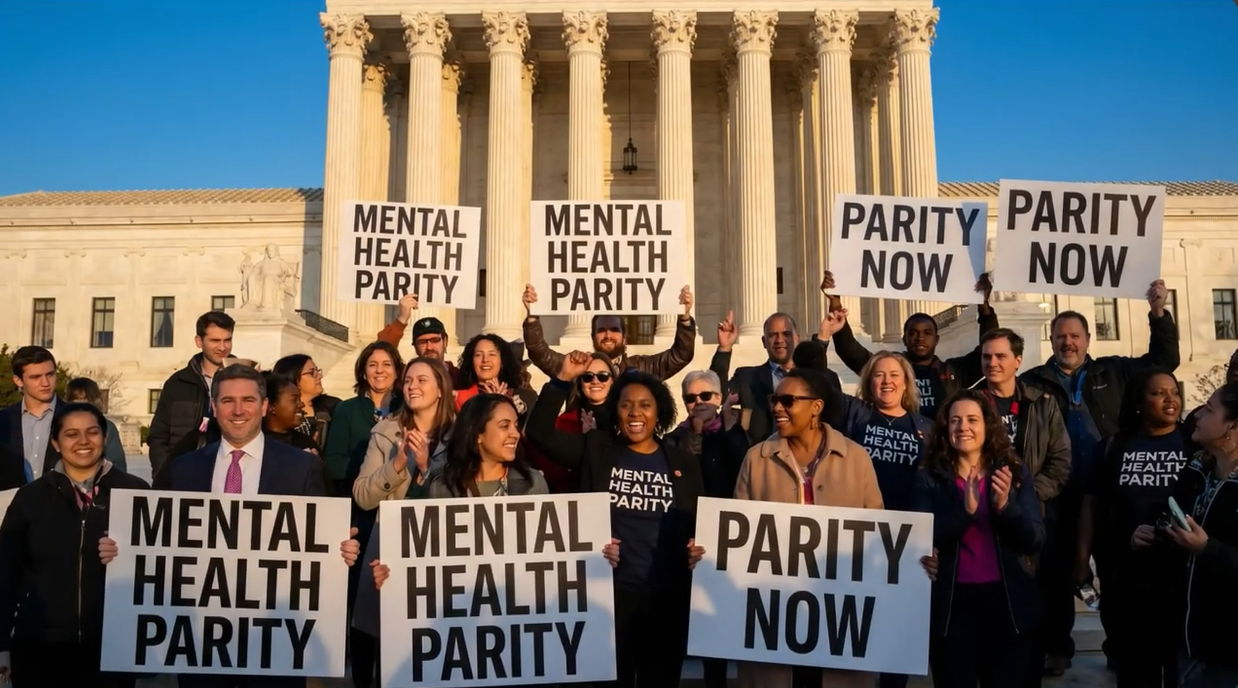
This is now how the system is supposed to work.
A Policy Environment in Motion
Americans remain more than 10 times more likely to go out of network for mental health care than for physical health care. For nearly two decades, parity enforcement has relied largely on anecdote, complaint, and litigation – not on standardized, comparable data. Regulators, employers, and even health plans themselves have lacked a clear way to see where parity is breaking down in practice.
That measurement gap has been the central challenge of parity.
Federal and state policymakers have been engaged on parity for some time. In September 2024, the federal government issued a new rule strengthening enforcement of MHPAEA, raising expectations for how plans evaluate and demonstrate compliance. At the same time, new transparency requirements have made more detailed data on pricing and networks available than ever before.
What has been missing is a way to turn that data into a clear, shared view of how parity is functioning across plans and geographies.
From Law to Measurement
Unveiled on April 20, 2026 in Washington, D.C. by The Kennedy Forum in collaboration with Third Horizon, the American Medical Association, the American Psychological Foundation, and Ballmer Group, the MHPI turns a complex policy issue into something anyone can explore. At its core, MHPI examines two questions:
1. How does in-network behavioral health access compare to physical health access?
2. How do reimbursement rates compare between the two?
Users can visit parityindex.org, select a state or county, and see where meaningful differences emerge—bringing a long-standing policy issue into clearer focus.
What the Data Shows
The relationship between reimbursement and access is well established. When payment rates are lower, fewer providers contract with carriers. When fewer providers are in network, patients have a harder time finding timely care. The MHPI makes this dynamic visible at the plan level for the first time, opening the door to a more informed conversation among insurers, employers, regulators, and consumers.
Why it Matters
By making differences in access and reimbursement visible, the MHPI creates a shared foundation for action. Employers can better evaluate plan performance. Regulators can more easily identify potential compliance issues. Insurers and providers can engage with a clearer understanding of where gaps persist.
As Greg Williams, President of Third Horizon, noted at the launch, “the Index gives health plans, employers, policymakers, and providers a clearer view of where parity breaks down in practice.”
The Work at Third Horizon
In this month’s Impact Story, Third Horizon’s Erica Bauer sits down with Nathaniel Counts of The Kennedy Forum and health services researcher Andy Wilson of Third Horizon to talk about what the MHPI measures, why reimbursement matters, and what real progress will look like.